




Lymphedema Rehabilitation
What is Lymphedema?
Lymphedema is the build-up of protein-rich fluid under the skin when lymph circulation in the body is impaired, either from birth or later in life. It usually appears as swelling in the arms and legs, and less often in the trunk.
The main goal of treatment is to increase lymphatic flow, both to stop the lymphedema from getting worse and to reduce the existing swelling.
Causes
Primary lymphedema results from lymphatic tissue that is missing or abnormal from birth. Secondary lymphedema is caused by a problem in the lymph vessels that develops later, and it is more common.
It can develop after surgery or radiotherapy for any type of cancer, especially breast, prostate and lower abdominal cancers. After breast surgery in which the lymph nodes under the arm are removed, the rate of lymphedema is around 25%.
The extent of surgery, the number of lymph nodes removed and radiotherapy all increase the risk. Minor injuries such as a blow to the arm or leg, scrapes and cuts, insect bites and infections can also trigger it.
Symptoms
- A feeling of tightness or fullness in the arm or leg
- Pain, heaviness, tingling
- Swelling and redness
- Difficulty moving the arm, hand or ankle
- A watch, ring, bracelet or shoes feeling tight
- Tight-feeling skin, discomfort and restlessness
If it develops slowly, it may go unnoticed unless measurements are taken. By the time it is visible, it may already need treatment.
Prevention
- Take every swelling seriously and see a doctor
- Keep the arm or leg clean and look after the skin
- Apply moisturiser after bathing and during the day
- Avoid manicures; push the cuticles back instead of cutting them
- Protect the limb from any kind of pressure
- Avoid blood pressure measurements, massage and other pressure on the limb
- Avoid repetitive movements such as scrubbing, pulling or pushing with the limb at risk
- Wash scrapes, scratches and insect bites with soap and keep them clean
- Use an antibacterial cream
- Clean and cover open wounds
- For minor burns, apply something cold, then wash with soap and water
- Watch for redness, swelling, warmth, tenderness and fever
- Protect the arm or leg from sunburn
- Use sunscreen
- Use oven gloves when handling hot dishes
- Be careful with boiling water and steam from the microwave
- Do not scrub the skin with a loofah or exfoliating mitt
- Avoid hot environments such as saunas and hot springs
- Do not have vaccinations, blood pressure measurements or blood drawn on the limb at risk
- Make sure the elastic in clothing is not tight
What Should You Do If Swelling Appears?
See a doctor straight away. Even if it has happened before, it should be assessed by a doctor.
Diagnosis
The simplest and most reliable method is to compare circumference measurements of the two arms or legs. Imaging such as Doppler ultrasound and lymphoscintigraphy can also be used.
Treatment
Treating lymphedema takes time and patience, but the results are good. If it is noticed early, treatment is shorter; if it has been present for a long time, treatment takes longer.
The main goal is to increase lymphatic flow, both to stop the lymphedema from getting worse and to reduce the existing swelling. Preventing joint stiffness and infection are also primary goals. The earlier it is noticed and treated, the better the chance of success.
Treatment Method
Following the treatment plan set by the physical medicine and rehabilitation specialist is key to success. Treatment can last more than a month, and it will not succeed if it is not applied correctly.
The aim is to reduce the swelling and stop it from coming back. Correct skin care is essential: a suitable moisturiser should be applied to the arm or leg twice a day, in one direction from bottom to top.
Manual lymphatic drainage is very important in treatment and should be performed by experienced, trained practitioners.
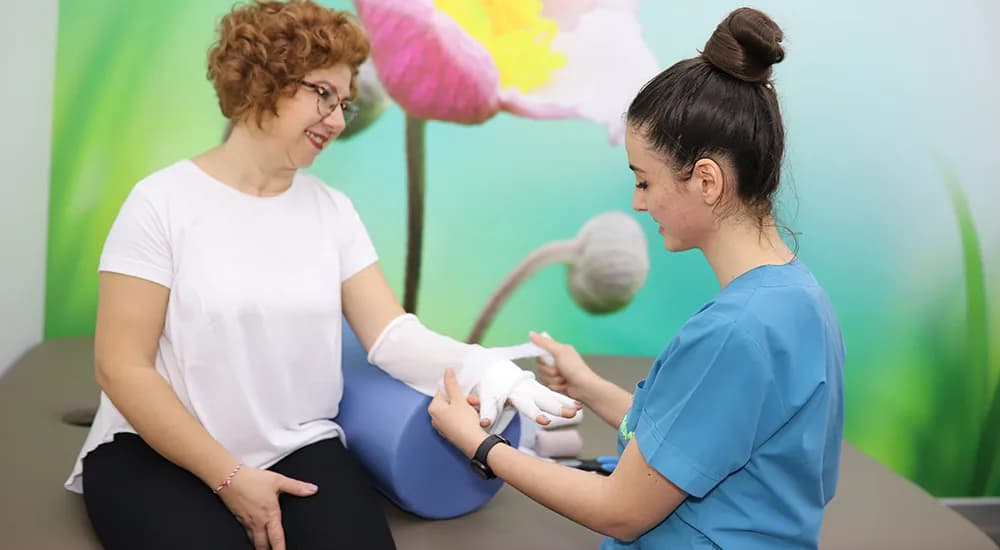
The next stage is bandaging. If the difference in circumference is large (2–2.5 cm between the two arms or legs), bandaging begins, using multiple layers of short-stretch bandages.
Once the difference has come down to the target range, a compression garment is used. Pneumatic compression devices and exercises are also part of treatment. Exercises must be continued during follow-up and afterwards to prevent recurrence.
Why Treatment Matters
Without treatment, infection or blood clots can develop in the arm or leg. The swollen limb becomes harder to move and stiffness develops over time. Pain, wounds and cracked skin cause discomfort, choosing clothes becomes difficult, and psychological distress may follow. Untreated lymphedema is very likely to get worse.
Would You Like to Book an Appointment?
Our specialist team will create the most suitable treatment plan for you.
Contact Us