






Physical Therapy
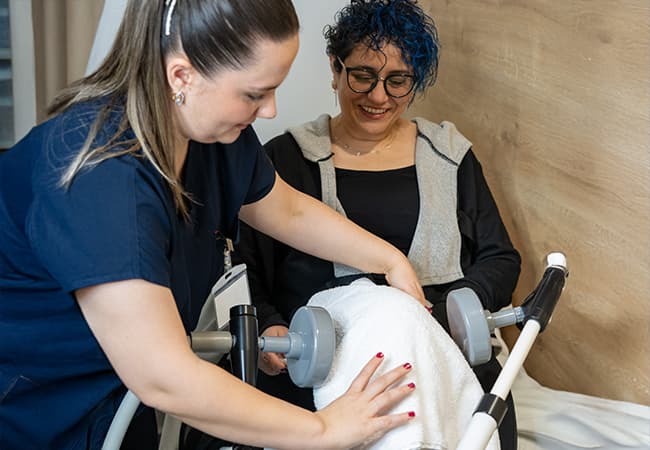
What Is Physical Therapy?
Physical therapy is a field of medicine focused on diagnosing and treating physical and functional disorders of the musculoskeletal system, whether present from birth or acquired later. Delivered by expert physiotherapists, this treatment aims to reduce pain, improve movement and raise quality of life.
What Methods Are Used in Physical Therapy?
- Cold and heat applications: Cold packs, hot packs, infrared, paraffin bath
- Deep heat therapy: Ultrasound, shortwave diathermy, microwave diathermy, ultraviolet
- Electrotherapy: Galvanic, faradic, TENS, diadynamic, interferential current, laser therapy
- Iontophoresis: Delivering medication through the skin with ultrasound or electrotherapy
- Hydrotherapy: Spa therapy, pool therapy, balneotherapy, fango (mud) applications
- Mechanotherapy: Mobilization, manipulation, traction, massage, splints, braces, bandages
- Therapeutic exercise programs
- Pain-relieving taping applications
What Are the Goals of Physical Therapy?
- Reducing pain
- Relaxing the muscles
- Improving circulation
- Relieving inflammation
- Restoring function and increasing movement
- Improving muscle coordination and strengthening the muscles
- Reducing the need for medication
- Preventing and correcting postural disorders
Which Conditions Can Physical Therapy Treat?
- Treatment of acute and chronic pain
- Follow-up and treatment of rheumatic diseases
- Orthopedic rehabilitation and sports injuries
- Rehabilitation of neurological and neuromuscular diseases
- Pediatric rehabilitation
- Metabolic bone diseases (osteoporosis, etc.)
- Congenital or acquired joint and bone disorders
- Cardiac rehabilitation
- Geriatric rehabilitation
- Pulmonary rehabilitation
What Are the Benefits of Physical Therapy?
- Less pain, numbness, tingling and weakness
- Regaining joint range of motion
- Avoiding unnecessary medical and surgical treatment
- Using less medication
- Preventing conditions from becoming chronic and progressing
- Better quality of life
Who Can Receive Physical Therapy?
Physical therapy is suitable for people of all ages, from children to older adults and from athletes to office workers. Anyone with pain, limited movement or loss of function can benefit from physical therapy.
How Long Does Physical Therapy Take?
A physical therapy session usually lasts 30 to 60 minutes, depending on the methods used. The length of treatment varies with the type and severity of the condition, but it may take 2–4 weeks for mild problems and 6–12 weeks for chronic conditions.
Things to Keep in Mind During Physical Therapy
- Attend your treatment program regularly
- Stick to your home exercise program
- Share your complaints with your physiotherapist
- Report any increase in pain right away
- Change medications only with your doctor's approval
Conditions We Treat
Browse the conditions we specialize in

Restless Leg Syndrome
Treatment of Restless Legs Syndrome Restless legs syndrome (RLS) is a long-term, or chronic, condition. It is a group of disorders marked by an uncomfortable feeling in the legs that makes it hard to fall asleep and stay asleep, and it sometimes runs in families. What Causes Restless Legs Syndrome? People with a family history of restless legs syndrome are known to be at higher risk. Apart from genetic predisposition, the condition can arise from many causes, and when these causes are brought under control, patients feel considerably better. The main factors that cause restless legs syndrome include vitamin B12 deficiency, diabetes, kidney failure, smoking, fibromyalgia, stress and muscle diseases. What Are the Symptoms of Restless Legs Syndrome? When patients go to bed in the evening, they feel pain in their legs and cannot find a comfortable place to put them. They are practically wrestling with their blanket. Although patients usually cannot describe their complaints exactly, they report discomfort, burning, tingling, a pulling sensation, pain and numbness in the legs. These complaints appear in the late afternoon and at night when the legs are still, and patients say they feel relief when they get up and walk around, move their legs or have them massaged. Restless legs syndrome may go through periods of improvement (remission) and periods of flare-ups (relapse). For example, pregnancy can increase flare-ups and make symptoms worse. Excessive physical activity, exposure to extreme heat or cold, lack of sleep, certain medications, alcohol and caffeine can also trigger flare-ups. How Is Restless Legs Syndrome Diagnosed? Restless legs syndrome is usually diagnosed based on the patient's complaints and clinical findings. There is no single laboratory test or imaging method that gives a definitive result for this syndrome. During diagnosis, the doctor asks in detail when the uncomfortable feeling in the legs started, in which situations it gets worse, and whether it eases with movement. Symptoms that become noticeable in the evening and at night while resting, and that ease temporarily with movement, are among the key clues in diagnosing restless legs syndrome. The patient's medical history, family history and current medications are also part of the evaluation. To rule out other health conditions that can cause restless legs symptoms, the doctor may order some blood tests. These may include iron level, ferritin, kidney function tests, thyroid hormones and vitamin B12. Detecting iron deficiency in particular can be decisive in shaping the treatment plan. Some patients may be referred to a sleep specialist to check whether sleep apnea or other sleep disorders are also present. A physical examination and neurological assessment may also be part of the diagnostic process. All of these steps are important for reaching the correct diagnosis and choosing the right treatment approach for each person. What Is Recommended for People With Restless Legs Syndrome? First, the temperature of the patient's bedroom should be normal. The patient should also wear comfortable pajamas, go to sleep and wake up at the same time each day, avoid daytime sleep as much as possible, and establish a regular sleep-wake cycle. Antiallergy medications and drugs that lower dopamine in the brain, which are known to worsen the condition's complaints, should be avoided. At least 45 minutes of exercise should be done daily, and at least 1.5-2 liters of water should be drunk. Very hot weather can trigger the symptoms of the syndrome. Can Restless Legs Syndrome Be Treated? Although many medications are used to treat restless legs syndrome, the first step is to identify and treat any accompanying diseases and metabolic disorders. In most patients, complaints may continue even after contributing causes (anemia, vitamin deficiency, etc.) are treated. Mild complaints can ease with massage, hot and cold applications, exercise, and avoiding triggering medications and caffeine. In patients with moderate to severe restless legs syndrome, medication is started. These patients are followed closely, and the dose is adjusted to keep the disease activity under control. With medication, very satisfying results can be achieved in most patients.

Sarcopenia (Muscle Loss in Elderly)
Treatment of Muscle Loss in Older Adults Muscle loss in older adults, known medically as sarcopenia , is the involuntary loss of muscle mass and function that comes with advancing age. What causes muscle loss in older adults? Generally known as a condition of people over 65, sarcopenia is a normal process we all go through. After our thirties, we lose about 1% of our muscle tissue each year. Aging ; the process begins at around age 65 and speeds up considerably after 80 Nutrition ; with age, the sense of taste weakens or changes, and poor nutrition leads to lower protein intake Reduced physical activity and an inactive lifestyle Age-related decreases in the secretion of hormones that increase protein production in muscle tissue, such as testosterone and growth hormone Why is muscle loss in older adults important? To live a physically independent life, we need healthy muscle tissue and muscle function. Muscle loss in older adults can lead to various health problems and end in unwanted outcomes such as physical disability, poor quality of life, injury and death. What are the signs of muscle loss in older adults? Muscle weakness and loss of strength Difficulty climbing stairs Balance problems, falls Difficulty carrying out daily physical activities Reduced muscle mass Difficulty getting up from a seated position and starting to walk How is muscle loss in older adults diagnosed? The severity of the condition can be determined with sarcopenia tests and sarcopenia measurements . To diagnose muscle loss in older adults, the necessary analyses of muscle mass, muscle strength and physical performance must be carried out. Can muscle loss in older adults be treated? So far, there is no approved medication to prevent muscle loss in older adults. Here, a number of preventive measures come to the fore. What can we do to prevent muscle loss in older adults? Muscle loss in older adults can be prevented with resistance (endurance) exercise and training Muscle-strengthening exercises should be done at least twice a week Foods that help prevent muscle loss in older adults should be provided with the guidance of a dietitian A high-quality protein diet and certain vitamin supplements , especially vitamin D

Fibromyalgia Syndrome
Treatment of Fibromyalgia Syndrome (Muscular Rheumatism) Fibromyalgia syndrome (FMS) is a condition marked by widespread pain together with various somatic and psychological symptoms, chiefly fatigue, morning stiffness, depression and sleep disorders. Fibromyalgia (FM), which has a negative effect on quality of life, affects about 1-2% of the general population and is three times more common in women. FM is seen most often between the ages of 40 and 55, and occurs more frequently in people with above-average education and income levels. What Is Fibromyalgia Syndrome? FMS, also known as soft tissue rheumatism, is a condition with a range of complaints, mainly sleep disorders, widespread muscle pain and tenderness, fatigue, weakness and morning stiffness. In fibromyalgia patients, muscle pain is often accompanied by depression and sleep disorders. Studies have found that the likelihood of depression accompanying fibromyalgia is 20-80%, while the rate of non-restorative sleep (sleep that does not become deep) is 75-90%. What Causes Fibromyalgia Syndrome? Although the syndrome has been recognized for a long time, its exact cause is not known. Genetic factors; these have been studied for many years. People with a first-degree relative who has FM have been found to have an 8 times higher risk of developing the condition. Environmental factors; emotional and physical trauma, especially in childhood, is known to be a risk factor for FM. Psychological factors; a close relationship is observed between FM and psychological components. FM is much more common in people with depression, anxiety and sleep disorders. Trauma; major physical trauma such as motor vehicle accidents is accepted as one of the causes. Rheumatic diseases such as RA (rheumatoid arthritis) and AS (ankylosing spondylitis) are listed among the triggers of FM. It has been suggested that some viruses may be responsible for fibromyalgia Education and income level; it is seen more often in people with above-average levels. Personality; it is more common in people with perfectionist and workaholic lifestyles, and occupationally in architects, journalists and people working in finance. Physical activity; it is more common in people who lead a sedentary, inactive life. What Are the Symptoms of Fibromyalgia Syndrome? The most common complaint in FMS is muscle pain. The pain is usually most pronounced in the neck and lower back, and is also often felt in the shoulders, elbows, knees and hands. Fatigue that usually tends to become chronic, felt in the morning and as the day goes on Sleep problems ; feeling unrested despite long sleep, difficulty getting out of bed Psychological changes such as depressed mood, worry, anxiety and panic attacks Difficulty concentrating, a feeling of fogginess, distractibility, dizziness Tension-type and migraine-type headaches Sensitivity to light, sound and smell Vague digestive complaints (nausea, reflux, bloating) How Should Fibromyalgia Syndrome Be Treated? In FMS, the muscle knots called fibrositis that cause pain can improve with physical therapy . A regular, stress-free life, a balanced diet, good-quality sleep and exercise form the basis of treatment. Exercise; low-intensity aerobic exercise at least three times a week is recommended. Swimming, walking, cycling and water sports are good choices. Physical therapy; treatments aimed at the muscles give very positive results. Aerobic dance, stretching and relaxation exercises, Pilates and yoga are also beneficial. Heat applications, electrical stimulation, spa therapy and massage are worth trying. Pay attention to sleep hygiene; avoid tea, coffee and alcohol before bed. Avoid ready-made and processed foods as well as sugar and flour, and eat high-fiber foods.

Lumbar Disc Herniation
What Is a Lumbar Disc Herniation? The spine is made up of stacked bones called vertebrae. A disc is a structure made of connective tissue that acts as a cushion between two vertebrae. The outer layer of the disc is tough and is called the shell (annulus fibrosus). Its center has a gel-like consistency and is called the nucleus (nucleus pulposus). With age, the center of the disc loses water and can no longer act as a cushion. This causes the center of the disc to push out through the outer layer and herniate. Most lumbar disc herniations occur in the discs between L4-L5 (the 4th and 5th lumbar vertebrae) and L5-S1 (the 5th lumbar vertebra and the 1st sacral vertebra). The herniated disc presses on a nerve, causing pain, numbness and weakness in the legs known as sciatica. What Causes a Lumbar Disc Herniation? Being overweight sets the stage for a lumbar disc herniation; because the spine carries the body's weight, excess weight puts pressure on the discs. Heavy lifting and poor movements in daily life, especially bending while twisting the lower back, pose a major risk. Heavy physical activity, jobs that expose the body to vibration, and standing or sitting for long periods increase the risk of a lumbar disc herniation. With age, the blood vessels that nourish the discs and the water content of the discs decrease, and the disc loses its cushioning function. Hereditary factors are also held responsible for lumbar disc herniation. What Are the Symptoms of a Lumbar Disc Herniation? The most common symptom is pain in the lower back and leg Numbness and tingling in the feet Limited mobility Difficulty walking and sitting Limping while walking In advanced lumbar disc herniations, complaints such as paralysis in the legs, sexual dysfunction, difficulty urinating or passing stool, or urinary incontinence may also occur. Treatment of Lumbar Disc Herniation Treatment depends on the degree of nerve compression caused by the herniation. If there is only low back and leg pain, short-term bed rest is recommended together with muscle relaxants and painkillers. Ultrasound, electrical stimulation, hot and cold applications and massage are used to relieve muscle spasm. In the early stages, gentle stretching exercises and posture changes are recommended. As the pain decreases, more comprehensive exercises are introduced. For severe pain in the acute phase, local anesthetic or steroid injections can be given at tender points. If the pain continues despite medical treatment and physical therapy, or if there is loss of strength in the legs or urinary problems, a surgical consultation is needed.

Spondylolisthesis
What Is Spondylolisthesis? Spondylolisthesis, commonly called a slipped vertebra, occurs when one of the vertebrae that make up the spine slips over the vertebra below it. This condition, which disrupts the alignment of the spine, affects about 3-5% of the general population. What Causes Spondylolisthesis? Trauma, which may be blunt or minor, in the form of microtrauma. Congenital spinal development disorders. Genetic factors; there is evidence that there may be a strong family link. Degeneration of the bones; usually seen after the age of 50. Spreading conditions such as cancer and certain blood disorders. What Are the Symptoms of Spondylolisthesis? The most common complaint that brings patients to a doctor is pain. The pain increases when bending forward and decreases when bending backward. It is usually felt in the lower back and hip area. Pain that worsens with heavy lifting, walking long distances or standing for long periods eases with rest. How Is Spondylolisthesis Diagnosed? A detailed history, a thorough physical examination and supporting imaging tests usually establish the diagnosis. Plain X-rays taken from the side are especially useful for diagnosis. Advanced methods such as CT, MRI and bone scintigraphy become important in follow-up and treatment. How Is Spondylolisthesis Treated? The first treatment approach should be conservative; most patients respond well to conservative treatment. Setting limits by avoiding certain sports activities Using medications such as NSAIDs when there is pain Wearing a rigid antilordotic lumbar brace (for at least 3-6 months) Physiotherapy The muscles of the lower back, hips, back and abdomen should be strengthened with exercise. Patients should be encouraged to take up activities such as swimming, walking and stationary cycling, and warned to stay away from activities that put load on the spine, such as running.

Cervical Flatback
Treatment of Cervical Straightening Cervical straightening (loss of cervical lordosis) is when the neck loses its natural "C"-shaped curve and becomes straighter. The job of this curve is to carry the weight of the head like a suspension system. Especially during actions such as jumping and leaping, it means less of the head's movement is transferred to the vertebrae of the back. What Causes Cervical Straightening? The most common cause is staying in poor posture for long periods, whether awake or asleep. Looking at phones, tablets and computers for long stretches is a significant risk factor. General causes: Cervical disc herniation and degeneration (disc disease) Bone and joint diseases Sitting, getting up, working and lying in poor positions Traffic accidents, especially rear-end collisions What Are the Symptoms of Cervical Straightening? Muscle pain and spasms; pain that worsens with neck movement and spreads between the shoulder blades Nerve-related complaints; various complaints caused by pressure on the nerve roots in the neck Over the years, osteophytes (bone spurs) may develop and compress the nerves Loss of spinal flexibility; the neck becomes more vulnerable to injury What Should You Pay Attention to With Cervical Straightening? Sit upright; your chair should be at a height where your knees form a 90-degree angle when your feet touch the floor The top edge of the monitor should be level with your eyebrows People who work at a desk all day should take a break every two hours and do neck exercises How Is Cervical Straightening Treated? Cervical straightening is most often a mechanical problem. Supporting the body's natural posture and restoring it will reduce the load on the nerves, muscles and discs. A neck collar can be used during painful periods under a doctor's supervision. Choosing a suitable pillow for sleeping is also important.
Cervical Disc Herniation
Treatment of Cervical Disc Herniation The cushions called discs between the vertebrae that make up our spine work much like a shock-absorbing suspension. Any damage to the disc structure can cause the gel-like fluid inside the disc to push outward. When this happens in the neck, a cervical disc herniation develops. Cervical disc herniation occurs most often at the C5-6 and C6-7 levels. What Causes a Cervical Disc Herniation? It is usually seen in people between the ages of 20 and 40. Blows to the head from various accidents Lifting weights in an unbalanced way Loss of disc fluid due to aging Sports and exercise done without proper knowledge Awkward and sudden movements Certain occupations (drivers, bankers, teachers) Weakness of the neck muscles Poor posture, psychological stress, fatigue What Are the Symptoms of a Cervical Disc Herniation? Pain in the neck, back, arms and shoulders Numbness and sensory loss in the arms Tingling and loss of strength in the arms Pain radiating from the back of the neck to the back and arms Reduced reflexes What Should You Pay Attention to With a Cervical Disc Herniation? Maintain a correct sitting position Avoid carrying loads that strain the neck Do sports and exercises that strengthen the neck muscles Use a pillow of suitable height and quality when sleeping How Is a Cervical Disc Herniation Treated? Patients should be taught correct posture and sitting positions and should avoid carrying heavy loads. In the acute phase, rest, medication and a neck collar may be used. Physical therapy includes exercises to strengthen the neck muscles, traction applied by the doctor, hot/cold therapy and manual massage. Most patients recover without surgery.

Cervical Stiffness (Torticollis)
Treatment of Stiff Neck A stiff neck is a common complaint that can occur at any age. It limits our daily movements and causes pain and discomfort. With changes in desk-based working habits and longer working hours, it has become one of today's common problems. What Causes a Stiff Neck? Certain occupations; over time, the work itself can affect the body and posture and lead to complaints Working at a desk without moving; staying in one fixed position for long periods Using a computer, tablet or phone for long periods Driving for long periods without breaks Carrying loads such as a heavy bag with one arm, or doing heavy housework Sudden movements during sleep Sudden cooling after sweating, exposure to wind, and air-conditioned environments Choosing a pillow of unsuitable firmness and height Conditions such as rheumatoid arthritis, osteoarthritis, cervical disc herniation and fibromyalgia What Are the Symptoms of a Stiff Neck? Pain; the most noticeable complaint. With a stiff neck, the person usually cannot turn their head in one direction. Tingling, numbness, weakness; usually felt in one arm. Headache; caused by tension in the neck muscles. How Does a Stiff Neck Get Better? NSAIDs and muscle relaxants can be used Rest; gives the tissue time to repair itself Hot and cold applications; pain is most severe in the first 24-48 hours Light exercises and stretching movements should be done Physical therapy and exercises to strengthen the neck muscles TENS can be used to deliver electrical stimulation to the painful area The neck can be supported with a soft collar for a short time

Nerve Compression (Pinched Nerve)
Treatment of Nerve Entrapment For all limb movements, such as those of the arms, legs, hands and feet, to work properly, nerve conduction must be intact. When these nerves are compressed in the narrow canals they pass through, this is called nerve entrapment. What Causes Nerve Entrapment? The most common nerve entrapment is carpal tunnel syndrome, which affects the median nerve at the wrist. Ulnar nerve entrapment and peroneal nerve entrapment can also occur. Other causes: Broken or displaced bones Diabetes, thyroid disease, obesity, menopause Rheumatic diseases Poor standing and sitting posture, repeated incorrect movements Nerve entrapment is more common in women aged 40-60, pianists, computer operators, bank employees and people who overuse their hands. What Are the Symptoms of Nerve Entrapment? The most important symptom is hand numbness that wakes you up at night. Over time, the fingers may lose strength and you may drop things you are holding. With advanced nerve entrapment in the legs, the patient may be unable to walk and may start dragging their foot. How Is Nerve Entrapment Diagnosed? A diagnosis can usually be made with a detailed history and physical examination. EMG (electromyography) can confirm the diagnosis even at an earlier stage. How Should Nerve Entrapment Be Treated? In cases without loss of strength, conservative treatment is used; splints, injections, anti-inflammatory drugs and physical therapy can be used to relieve the area where the nerve is compressed. Physical therapy includes hydrotherapy, ultrasound, paraffin, laser and magnetic field therapy. If severe nerve entrapment is found, surgery should be considered. What Can We Do to Prevent Nerve Entrapment? Pay attention to how you sit, lie and stand, and avoid staying in a poor position for long periods People who use a keyboard and mouse all day should not keep their wrists bent for long periods Avoid carrying too much weight with your hands and keeping your wrists bent Do regular stretching and flexibility exercises to keep your ligaments, joints and muscles strong

Tendinitis and Bursitis
What Is Tendinitis and How Is It Treated? Tendons are the structures where muscles narrow into cords and attach to bone. Overuse can cause inflammation and swelling at these attachment points; this is called tendinitis. Tendinitis and bursitis are a group of conditions that usually affect the shoulder, elbow, wrist, hip, knee and ankle. What Is Bursitis? Bursae are small sac-like tissues that act as cushions between moving structures such as bones, muscles, tendons and skin. Inflammation of these sacs is called bursitis. What Causes Tendinitis and Bursitis? Repeating the same movement for long periods while using a keyboard, or doing cutting and chopping work over and over Using gripping hand tools such as scissors and pliers for long periods Repeatedly using backhand strokes in tennis and similar sports In older age, it is more frequent and widespread in the legs, hips and elbows It is seen more often in people with gout, diabetes, blood disorders and kidney disease How Are Tendinitis and Bursitis Treated? Rest: the joint should be rested for a short time Cold application: applying ice for 10-15 minutes 2-4 times a day helps Medication: NSAIDs and painkillers Steroid injections can provide short-term relief in some types of tendinitis Supports: orthoses can be used to reduce the load on the joint Physical therapy: strengthening and stretching exercises, hot/cold applications, massage and personalized exercise programs Precautions for Tendinitis and Bursitis Warm up and stretch before sports or exercise Start exercising slowly and increase the intensity as you warm up Regular, low-intensity exercise every day is healthier than one intense workout a week

Kyphosis (Hunchback)
Treatment of Adult Kyphosis (Hunchback) From birth to old age, the sagittal (side-view) alignment of the spine is constantly changing. Four successive curves in alternating directions form in the neck, upper back, lower back and pelvis. What Is Adult Kyphosis? Adult kyphosis, also called hunchback, is an increase in the forward curvature of the spine in the upper back. On side-view X-rays taken in a relaxed position, the Cobb angle measured between T5 and T12 is normally 10-40 degrees. An angle greater than 40 degrees is called kyphosis. What Causes Kyphosis? Degeneration of the spine due to external factors Degenerative disc diseases caused by osteoporosis Fractures resulting from accidents or trauma Congenital abnormalities Inflammation and infection in the tissues around the spine Primary infections of the spine such as tuberculosis Neuromuscular diseases Tumors affecting the spine What Are the Symptoms of Adult Kyphosis? The most obvious sign is a forward curve Stiffness and pain in the back and shoulders Persistent numbness and weakness in the legs A feeling of excessive muscle fatigue Postural problems, difficulty standing upright Shortness of breath and difficulty breathing Can Hunchback Be Prevented? The most common cause of hunchback is poor posture. Strengthening the abdominal, chest, leg and spinal muscles with kyphosis exercises can bring the curve back within normal limits. Can Adult Kyphosis Be Treated? In patients with kyphosis of up to 50-55 degrees, regular exercise and correct posture techniques can lead to marked improvement. If the kyphosis is between 50 and 70 degrees, a kyphosis brace is recommended.

Carpal Tunnel Syndrome
Treatment of Carpal Tunnel Syndrome (Nerve Compression at the Wrist) The carpal tunnel is a narrow canal formed between the wrist bones and the carpal ligament. The median nerve passes through this canal and provides sensation and some movement to the thumb, index, middle and ring fingers. When the canal narrows, the median nerve is compressed and carpal tunnel syndrome develops. What Causes Carpal Tunnel Syndrome? Pressure on the nerve can arise in several ways: Swelling of the sheaths of the tendons that bend the fingers Joint fractures and dislocations, soft tissue injuries Postural causes, such as keeping the wrist bent for long periods Edema during pregnancy (it often resolves on its own after delivery) Who Gets Carpal Tunnel Syndrome? It is seen more often in groups such as homemakers who do a lot of handwork, bank employees who use computers, secretaries and people who play musical instruments. It is also more common in diabetes, hypothyroidism, rheumatic diseases and obesity. In women over forty, it occurs four times more often than in men. What Are the Symptoms of Carpal Tunnel Syndrome? The condition usually starts with pain, which can sometimes spread to the arm. Numbness in the palm and fingers, burning, and weakness in finger movements follow. The numbness can be severe enough to wake the patient at night. If it is not diagnosed early and no measures are taken, the complaints gradually get worse; over time, gripping objects becomes difficult and the muscles of the palm waste away. How Is Carpal Tunnel Syndrome Diagnosed? Early diagnosis and treatment before permanent damage occurs is very important. An EMG (electromyography) test can show whether the median nerve is compressed, as well as where and how severely. How Is Carpal Tunnel Syndrome Treated? If there is no underlying condition such as diabetes or hypothyroidism, the affected hand and wrist usually need to be rested for at least two weeks. Immobilizing the wrist with a splint is important, especially a resting splint worn at night. Pain can be relieved with NSAIDs. For pain that does not go away, a cortisone or local anesthetic injection into the wrist may be given. If symptoms last 6 months or longer, or if EMG shows advanced nerve damage, surgery should be considered.
Would You Like to Book an Appointment?
Our specialist team will create the most suitable treatment plan for you.
Contact Us